New York
New York State Museum
222 Madison Avenue, Albany, New York, 12230
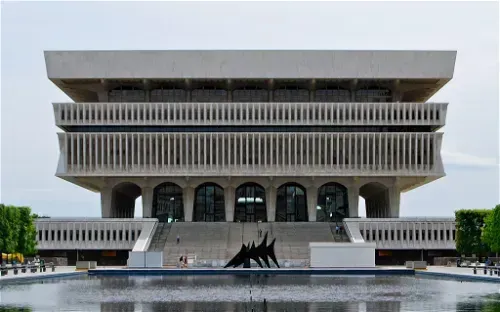
Plan your visitAmerica's Tapestry comes to the New York State Museum in Albany from November 2027 through February 2028, one stop on a national tour that opened at the Muscarelle Museum of Art in Williamsburg, Virginia, in June 2026 and now travels the original thirteen colonies. The full collection of needlework panels — one for each colony, stitched by some two thousand volunteers to mark the nation's 250th anniversary — will be on view in a museum that has been gathering and telling New York's stories since 1836. Chartered that year and now the oldest and largest state museum in the country, it sits on the Empire State Plaza facing the State Capitol, a fitting home for a project so deeply concerned with how the colonies came to be states at all.
There is a particular resonance in showing the collection here, because New York holds one of the thirteen panels as its own. The state stood at the center of the Revolution: British forces made New York City their headquarters from 1776 to 1783, while upstate, the American victory at Saratoga in the autumn of 1777 proved the turning point of the war and brought France into the fight as an ally. Albany, at the head of the Hudson–Champlain corridor that made New York so strategically contested, sits squarely within that history.
New York's panel was designed in collaboration with the Fraunces Tavern Museum and stitched by the New York Capital District Chapter of the Embroiderers' Guild of America. It depicts the Birch Trials, the process at war's end that formally emancipated nearly three thousand Black Loyalists in return for their service to the Crown and resettled them in Nova Scotia — its scenes moving from a man arguing his case for freedom before a table of generals to a freed family boarding a ship in New York Harbor. Visitors who come for the tapestries will find, in this one panel especially, a chapter of the Revolution that unfolded on the very ground the museum has spent nearly two centuries preserving.